



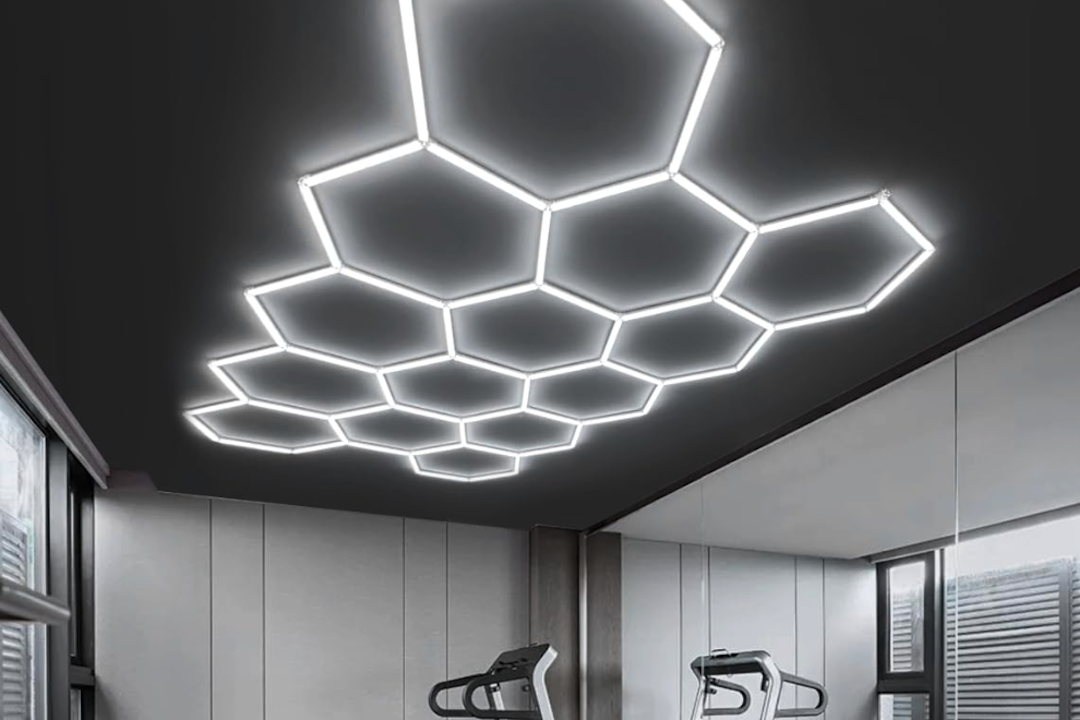
So, you’re wondering about those cool-looking hexagonal honeycomb LED lights you’re seeing pop up in garages? In short, they’re a fantastic, practical solution for anyone who wants seriously good, even illumination in their workspace, without a huge headache during installation. They deliver a lot of light, look modern, and are surprisingly versatile. Let’s dig into why these are becoming such a popular choice.
Beyond just looking sharp, these systems offer tangible benefits that traditional fluorescent tubes or standard LED panels often miss. It’s not just about brighter – it’s about better.
Superior Light Distribution
One of the biggest frustrations with typical garage lighting is uneven illumination. You get bright spots and shadows, especially around your workbench or when you’re working under the hood of a car.
Eliminating Shadows and Hotspots
The hexagonal grid design means light Bonisis comes from multiple angles, flooding the entire space more evenly. Think of it like a perfectly distributed light source across your entire ceiling, rather than isolated streaks of light. This significantly reduces those annoying shadows that always seem to appear precisely where you’re trying to see.
Enhanced Visibility for Detailed Work
When you’re trying to find a dropped bolt or diagnose a small engine issue, good, consistent light is crucial. With these systems, every corner of your garage gets ample light, making intricate tasks much easier on your eyes and less prone to mistakes.
Energy Efficiency and Longevity
Nobody wants a huge electricity bill, and replacing bulbs constantly is a pain. LED technology, in general, is a winner here, and these honeycomb systems are no exception.
Lower Running Costs
LEDs consume significantly less power than older incandescent or even fluorescent setups. While the initial investment might be a bit more, the long-term savings on your energy bill are substantial. This is particularly true if your garage is a high-use area.
Extended Lifespan with Minimal Maintenance
Most quality LED systems boast lifespans of 25,000 to 50,000 hours or more. This translates to years of maintenance-free operation. No more climbing ladders to change flickering tubes every few months, which is a massive bonus for anyone with a busy garage.
What to Look for When Buying
Not all honeycomb LED systems are created equal. Knowing what specifics to pay attention to will help you pick a system that truly meets your needs and lasts.
Brightness (Lumens) and Light Output
This is probably the most crucial factor for a garage. You want a lot of light.
Understanding Lumens Per Square Foot
While there’s no single magic number, a good rule of thumb for a workshop or garage is around 50-70 lumens per square foot. For a standard two-car garage (around 400 square feet), you’d be looking for a system that provides between 20,000 and 28,000 lumens total. Don’t be fooled by high wattage; always look at the lumen output.
Dimmability Considerations
Some systems offer dimmable options, which can be great if you use your garage for various activities – maybe bright light for detailing, and a softer glow for relaxing or less intensive tasks. Just ensure the dimmer switch is compatible with LED technology.
Color Temperature (CCT)
This refers to how “warm” or “cool” the light appears, measured in Kelvin (K).
Ideal Range for Garages and Workshops
For task-oriented environments like a garage, a cooler color temperature is generally preferred. Look for lights in the 5000K to 6500K range. This “daylight” or “cool white” spectrum is excellent for visibility, color rendering, and staying alert. Warmer lights (2700K-3500K) are better for living spaces and relaxation.
Impact on Color Accuracy
If you’re painting, detailing, or matching colors in your garage, a higher Kelvin temperature helps ensure you see true colors without a yellow or blue tint. This is particularly important for hobbies or professional work.
Durability and Construction Materials
Your garage isn’t a pristine showroom. Lights need to withstand a bit of abuse.
Robust Frame Materials
Look for systems with sturdy aluminum frames. This not only aids in heat dissipation (critical for LED longevity) but also provides robust protection against bumps and knocks. Plastic frames, while cheaper, might not hold up as well over time.
IP Rating for Dust and Moisture Resistance
An IP (Ingress Protection) rating indicates how well a fixture is protected against solids (like dust) and liquids (like splashes). For most garages, an IP44 rating is a good minimum, protecting against tools bumping into lights and light water splashes. If your garage gets particularly dusty or damp, an IP65 might be worth considering.
Installation Considerations
Don’t let the complex look of these systems intimidate you. While they require some effort, they’re often designed for relatively straightforward assembly.
Assembly Process
Most honeycomb systems come as a kit of individual LED tubes and connectors.
Modular Design Benefits
The modular nature is a huge plus. It means you can often customize the layout to fit your specific garage dimensions or even create unique patterns. Installation usually involves fitting the tubes into connectors, much like a giant Lego set, then wiring them to a power source.
Tools and Time Required
You’ll generally need basic hand tools: a drill for mounting, wire strippers, and likely a voltage tester. While not typically a day-long project, plan for a few hours, especially if you’re working alone or have a large system. Having a second pair of hands can make connecting the larger sections much easier.
Wiring and Electrical Requirements
This is where safety and proper planning come in.
Standard 120V AC Power
Most systems run on standard household 120V AC power. You’ll usually wire the system directly into an existing ceiling fixture or a junction box. If you’re uncomfortable with electrical work, it’s always best to consult or hire a qualified electrician.
Potential for Dedicated Circuitry
For very large systems or heavily used garages, consider if a dedicated circuit is beneficial. This prevents overloading existing circuits and ensures consistent power delivery to your lights.
Mounting Options
How you attach the system to your ceiling is important for both safety and aesthetics.
Surface Mount vs. Suspended
Most hexagonal systems are designed for surface mounting, attaching directly to the ceiling joists or drywall with appropriate anchors. Some come with options for suspension cables, which can be useful for very high ceilings or to get the light closer to your workspace.
Secure Attachment is Key
Given the size and weight of these systems once fully assembled, ensure you’re mounting them securely. Use appropriate fasteners for your ceiling type (wood screws into joists, toggle bolts for drywall, etc.).
Practical Tips for Your Setup
Getting the lights installed is one thing, but optimizing their use is another.
Layout and Design
Don’t just think about plopping a rectangle in the middle of your ceiling.
Customized Patterns for Specific Zones
The modularity means you can adapt. If you have a primary workbench, consider focusing a denser part of the pattern there. If you have a car lift, ensure the light reaches high and low. You can create L-shapes, T-shapes, or extend a main grid with smaller offshoots.
Aesthetic Considerations
While practicality is key, these lights do look fantastic. Consider how the pattern integrates with your garage’s overall look. A well-designed hexagonal system can really elevate the appearance of your workspace.
Maintenance and Cleaning
Good news: very little is required.
Simple Dusting
Because they are sealed, dust usually just settles on the surface. A simple wipe down with a damp cloth (when the lights are off, of course) every now and then is usually sufficient to keep them looking and performing their best.
Checking Connections
Periodically, especially after the initial installation settles, it’s not a bad idea to do a quick visual check of all the connections to ensure nothing has come loose, though this is rare with quality systems.
Pairing with Other Lighting
While powerful, these shouldn’t necessarily be your only lights.
Task Lighting Augmentation
For extremely detailed work – say, restoring a small engine or intricate model building – you might still want a specific directional task light right over your immediate workspace. The honeycomb system provides the excellent ambient light that makes those task lights even more effective.
Ambient vs. Accent Lighting
The hexagonal system primarily serves as your main ambient light source. If you have display shelves for tools or collectibles, consider adding smaller LED strip lights or puck lights for accent lighting to highlight those areas.
Potential Downsides and Things to Consider
No product is perfect, and it’s good to be aware of any potential drawbacks.
Initial Cost
These systems are generally more expensive upfront than a few fluorescent tubes or basic single LED panels.
Long-Term Value Justification
However, when you factor in energy savings, longevity, vastly superior light quality, and reduced maintenance, the long-term value often outweighs the initial investment for serious garage users.
Installation Complexity (for some)
While designed to be modular, it’s still a larger project than screwing in a single bulb.
DIY vs. Professional Help
If you’re not comfortable with basic electrical work or working on ladders for extended periods, factoring in the cost of hiring an electrician for installation might be necessary.
Ceiling Height Requirements
While not always a deal-breaker, consider your ceiling height.
Impact on Headroom
These systems typically hang down an inch or two from the ceiling. For very low ceilings, this might slightly impact headroom, though it’s usually negligible. Always measure to be sure.
Optimal Viewing Distance
The “honeycomb” effect is most apparent and visually striking from a comfortable viewing distance. If your ceiling is extremely high, you might appreciate the light but lose some of the visual impact of the pattern itself.
Final Thoughts
High-brightness hexagonal honeycomb LED ceiling lamps are a genuinely transformative upgrade for any garage. They blend impressive aesthetics with powerful, shadow-reducing illumination and long-term energy efficiency. If you spend significant time in your garage, whether for tinkering, car care, hobbies, or simply using it as a general workspace, investing in one of these systems will dramatically improve your experience. Just remember to focus on lumens, color temperature, and robust construction to ensure you get a system that truly shines for years to come.

