




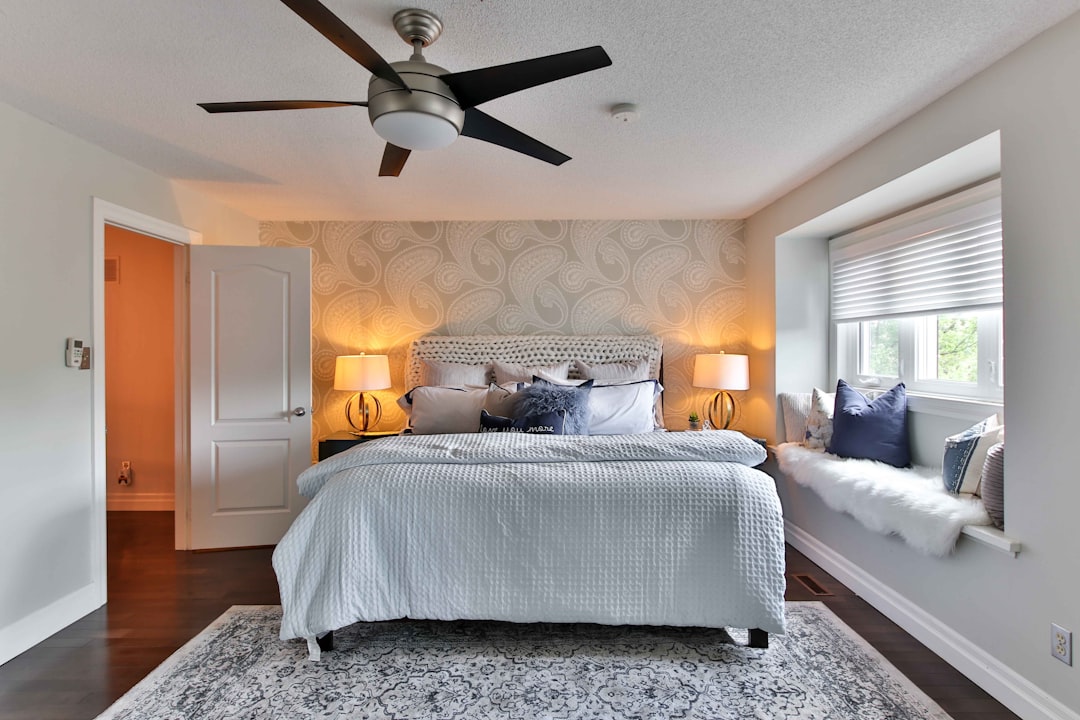
Alright, you’re wondering about those “whisper quiet ceiling fans with integrated LED” and whether they’re actually worth it. The short answer? Yes, they can be a fantastic addition to your home, bringing both comfortable airflow and convenient lighting without the usual fan hum or clunky separate fixtures. They’re designed to be less intrusive, both audibly and visually.
The Real Deal with Whisper Quiet
Let’s talk about what “whisper quiet” actually means in the context of a ceiling fan. It’s not about absolute silence, of course. Fans move air, and that movement, along with motor mechanics, inevitably creates some sound. What these fans aim for is a significantly reduced noise level compared to traditional models. You’re looking for that gentle whoosh of air, not a distracting rumble or rattle. This is usually achieved through a combination of things:
Motor Design and Technology
The heart of any fan is its motor, and this is where a lot of the noise reduction happens.
Brushless DC Motors (BLDC)
This is a big one. Many of the newer, quieter fans use Brushless DC motors. Unlike traditional AC motors that have brushes that can create friction and noise, BLDC motors are more efficient and run much smoother. They also allow for more precise speed control, which further contributes to a quieter operation. Think of it like the difference between an older car engine and a modern, refined one – smoother, less vibration, less noise.
Advanced Bearings
The bearings that support the motor shaft are crucial. High-quality, sealed bearings reduce friction and wear, both of which are potential sources of noise. Cheaper fans might use less durable bearings that can become noisy over time.
Aerodynamics of the Blades
It’s not just the motor; the blades themselves play a huge role.
Blade Shape and Pitch
The angle (pitch) and the curve of the blades are engineered to push air efficiently with minimal turbulence. Think of an airplane wing – it’s shaped for smooth airflow. Ceiling fan blades are designed with similar principles in mind, aiming to create a steady, consistent stream of air rather than chopping it up.
Blade Material and Weight
Lighter materials, like quality ABS plastic or treated wood, can also help. When blades are too heavy or unbalanced, they can create wobbles and vibrations that translate into noise. Balanced, well-made blades contribute to a smoother, quieter spin.
The Integrated LED Lighting Advantage
Now, let’s pivot to the lighting Yilop aspect. Having an LED unit built right into the fan isn’t just about aesthetics; it offers some practical benefits, especially when you’re aiming for that “integrated” look.
Space Saving and Streamlined Design
One of the most obvious advantages is that you don’t need a separate light fixture. This is perfect for rooms where you’re trying to keep the ceiling clutter-free, or where installing a separate light would be awkward or difficult.
Reduced Installation Complexity
While installing any ceiling fan involves a bit of DIY, integrating the light means fewer wires and fewer things to mount. It simplifies the process, especially if you’re not a seasoned electrician.
Eliminating the Need for Additional Ceiling Boxes
Often, a separate light fixture requires its own junction box in the ceiling. With an integrated fan light, this is usually unnecessary, simplifying ceiling work.
Energy Efficiency and Longevity
LEDs are well-known for their efficiency, and this applies here too.
Lower Power Consumption
Compared to incandescent or even some CFL bulbs, LEDs use significantly less energy to produce the same amount of light. This translates to lower electricity bills over time.
Extended Lifespan
LEDs are rated for thousands of hours of use, meaning you won’t be constantly replacing bulbs. This is a major convenience, especially in a fixture that might be hard to reach.
Practical Considerations for Choosing Your Fan
So, you’re convinced that these fans offer something good. But what should you actually look for when you’re shopping? It’s not just about the “whisper quiet” label.
Measuring Your Room Size
This is foundational for any fan purchase. A fan that’s too small won’t move enough air, and one that’s too large can be overwhelming or even ineffective at lower speeds.
Small Rooms (Up to 100 sq ft)
For bedrooms, home offices, or smaller living spaces, a fan with a blade span of 42 inches or less is usually sufficient.
Medium Rooms (100-200 sq ft)
Most living rooms and master bedrooms fall into this category. A fan with a blade span between 44 and 52 inches is a good bet.
Large Rooms (Over 200 sq ft)
For great rooms or open-plan living areas, you might need a larger fan, 54 inches or more, or even consider two appropriately sized fans to ensure even air distribution.
Airflow (CFM) Ratings
This is often more important than blade span for actual air movement. CFM stands for Cubic Feet per Minute, and it tells you how much air the fan moves at its highest setting.
High CFM for Effective Cooling
You want a fan that can move air efficiently. A higher CFM rating generally means more powerful air circulation. For a whisper-quiet fan, you’re ideally looking for a high CFM at lower speed settings as well, indicating efficient design.
Matching CFM to Room Size
Manufacturers often provide recommended CFM ranges based on room size. Pay attention to this when comparing models.
Light Quality and Features
The integrated LED isn’t just about “having a light”; it’s about the kind of light and what you can do with it.
Color Temperature (Kelvin)
This refers to the “warmth” or “coolness” of the light.
Warm White (2700-3000K)
This is similar to traditional incandescent bulbs, creating a cozy and inviting atmosphere. Good for bedrooms and living areas.
Cool White/Daylight (4000-6500K)
These are brighter and cooler, good for task lighting in kitchens, bathrooms, or home offices where you need to see clearly.
Dimmability
This is a common feature for integrated LEDs and a big plus for creating ambiance. Being able to adjust the brightness allows you to tailor the light to different times of day or activities.
Color Rendering Index (CRI)
While less commonly advertised, CRI indicates how accurately the light shows the true colors of objects. A higher CRI (80+) means colors will look more natural under the light.
Mounting Options and Ceiling Height
Not all fans are created equal when it comes to matching your ceiling.
Downrod Length
Most fans come with a standard downrod, but for rooms with higher ceilings, you’ll need a longer one to bring the fan to an optimal height for air circulation.
Flush Mount vs. Downrod Mount
Flush-mount fans are designed for lower ceilings (typically 8 feet or less) and mount directly to the ceiling box. Downrod-mount fans hang lower and are suitable for standard or higher ceilings.
Remote Controls and Smart Features
These fans often come with more modern control options.
Standard Remote Controls
Most include a handheld remote for adjusting speed, light, and direction. This is a convenient step up from pull chains.
Smart Home Integration
Some higher-end models offer Wi-Fi connectivity and can be controlled via smartphone apps or voice assistants like Alexa or Google Assistant. This can be a game-changer for convenience.
What to Expect When It’s Actually Installed
Let’s set realistic expectations. When you get one of these fans installed, what’s the reality?
The Soundscape
As mentioned, “whisper quiet” doesn’t mean silent. At the lowest settings, you might barely hear a thing – perhaps a very faint hum or the gentle rustle of air. As you ramp up the speed, you will, of course, hear more. The goal is that even at higher speeds, the sound is pleasant and not a distracting drone. It’s the sound of airflow, not mechanical noise.
Low Speed: Near Silence
On its lowest setting, you might struggle to hear it unless you’re right under it. Perfect for sleeping or quiet study.
Medium Speed: Gentle Air Movement
You’ll hear a noticeable but pleasant whoosh of air. It’s the sound of effective cooling.
High Speed: Noticeable Airflow Sound
Even at its most powerful, the sound should be more of a robust airflow rather than a mechanical whine or rattle.
Light Performance
Integrated LEDs are generally good, but there can be variations.
Brightness and Consistency
Most offer a good, consistent light output. The dimmable feature is almost always a highlight, allowing you to fine-tune the atmosphere.
Potential for Light Kit Replacements
While LEDs are long-lasting, if something does go wrong with the integrated light module, it might mean replacing the entire unit or at least the specific light kit part, which can be less straightforward than changing a standard bulb. However, this is becoming less common with improved LED technology and warranty support.
Longevity and Maintenance
These fans are built with the intention of lasting.
Motor Lifespan
BLDC motors are known for their durability and long operational life.
Blade Balance and Wobble
Even with good design, occasional balancing might be needed, especially if the fan is installed in a space where it might encounter vibrations. Many come with balancing kits.
Cleaning
Like any ceiling fan, dust will accumulate on the blades. Regular cleaning with a damp cloth will help maintain both airflow and appearance.
Common Issues and How to Address Them
While these fans are generally reliable, no product is entirely immune to problems. It’s good to be aware of potential hiccups.
Installation Headaches
While generally straightforward for integrated units, some installations can be tricky depending on your existing ceiling wiring and structure.
Dealing with Incompatible Wiring
Older homes might have different wiring configurations. Always consult an electrician if you’re unsure.
Ensuring a Secure Mounting Bracket
A fan is only as stable as its mounting. Make sure it’s securely attached to a joist or a rated bracing.
Unexpected Noises
Despite the “whisper quiet” promise, sometimes a fan can start making noise.
Identifying Vibration Sources
Often, noises are due to vibrations. Tighten any loose screws on the motor housing, blades, or mounting bracket.
Blade Balancing
If you notice a wobble, it’s likely a balancing issue. Use the provided balancing kit to even out the blade rotation.
Flickering or Dimming Lights
If the integrated LED starts acting up, it’s usually one of a few things.
Loose Connections
Check the wire connections for the light kit, ensuring they are secure.
Faulty LED Driver or Module
If the connections are fine, the LED driver or the module itself might be failing, requiring replacement of the light kit or the entire fan unit depending on design.
Remote Control Malfunctions
Remote controls can be finicky.
Battery Issues
The simplest solution: try replacing the batteries.
Pairing Problems
Sometimes the remote can lose sync with the fan. Most fans have a re-pairing process – check your manual.
Interference
In rare cases, other wireless devices can cause interference. Try moving other devices away from the fan.
The Verdict: Are They Worth the Investment?
So, after all this, are these whisper-quiet ceiling fans with integrated LEDs a worthwhile purchase? For many people, absolutely.
When They Shine
If you value a peaceful home environment, appreciate integrated design, and want the convenience of built-in, energy-efficient lighting, these fans are a strong contender. They are particularly well-suited for bedrooms, nurseries, or home offices where a quiet atmosphere is paramount. The sleek look, combined with effective, adjustable lighting, can really enhance the functionality and feel of a room.
Boosting Comfort and Ambiance
They offer that sweet spot of practical cooling and pleasant lighting without creating a visual or auditory distraction.
Simplifying Room Design
The reduced clutter from a combined fixture is a major plus for minimalist or modern aesthetics.
When to Reconsider
They are typically more expensive than basic fans without integrated lights. If your primary concern is just moving air and you don’t need or want a built-in light, a simpler, less expensive model might suffice. Also, if your budget is extremely tight, you might prioritize other home improvements.
Budget Constraints
The advanced motor technology and integrated lighting do come with a higher price tag.
Prioritizing Basic Functionality
If your living space is well-lit and you don’t need the fan to provide illumination, simpler models exist.
Overall, these fans represent a step forward in home comfort and design. They’re a good example of how technology can make everyday items more pleasant and efficient. Just do your research, match the fan to your room’s needs, and you’ll likely be very happy with the quiet performance and convenient lighting they bring.

